

Content reviewed by:
Alex Shulman
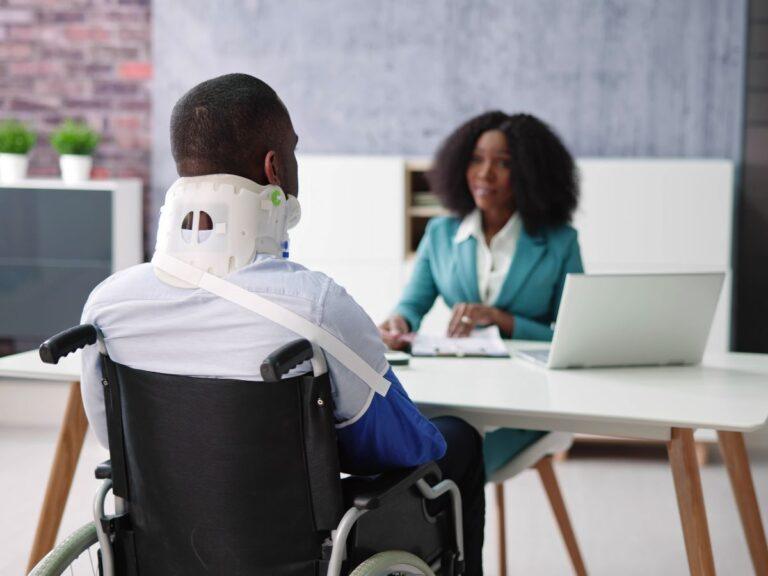
Liability for a forklift tip-over injury in New York depends on the circumstances of the accident. It’s common for lawyers to consider holding third parties accountable for incidents like these, including contractors, property owners, or equipment companies.
Meanwhile, workers who are injured by forklifts that tip over on the jobsite might have access to workers’ compensation benefits as well.
To fully understand who is liable for a forklift tip-over injury in New York, call a workers’ compensation lawyer in New York at Shulman & Hill.
What Causes Forklift Tip-Over Accidents?
Forklift tip-overs rarely happen because of a single mistake. In many cases, several unsafe conditions combine to create a dangerous situation.
These are examples of common contributing factors in cases like yours:
- Carrying loads that exceed the forklift’s capacity
- Driving too fast while turning
- Operating on uneven or unstable surfaces
- Improperly balanced loads
- Mechanical failures
- Poor maintenance
- Inadequate operator training
- Unsafe worksite conditions
- Driving on ramps or slopes incorrectly
- Failure to follow established safety procedures
A careful investigation by Shulman & Hill can help you determine exactly what caused the accident and whether multiple parties contributed to it.
Who Can Be Liable for a Forklift Tip-Over Injury?
One of the biggest misconceptions about workplace accidents is that the employer is always the only party who can be held responsible.
While workers’ compensation benefits are available in many workplace injury cases, there are situations where someone outside your employer may also bear legal responsibility.
At Shulman & Hill, we’ll focus on identifying every potentially liable party. After all, it’s a very important part of workplace injury investigations.
An Employer’s Workers’ Compensation Insurance
Many New York employers are required to carry workers’ compensation insurance for employees. Here’s what workers’ compensation benefits can help you cover:
- Medical treatment
- A portion of lost wages
- Ongoing medical care
- Certain disability benefits
Importantly, workers may still qualify for benefits even if they do not miss time from work. Many injured employees continue working while receiving workers’ compensation benefits, depending on their medical condition and work restrictions.
Because the workers’ compensation system generally does not require proof of negligence, injured employees may qualify for benefits even when no one intentionally caused the accident.
Third Parties
In some forklift accidents, someone other than the employer could have contributed to the incident. These are examples of third parties who might be liable:
- Contractors working on the same jobsite
- Property owners
- Equipment rental companies
- Maintenance providers
- Subcontractors responsible for site safety
- Other businesses operating at a shared work location
When a third party’s negligence contributes to a forklift tip-over, an injured worker may have the right to pursue a personal injury claim in addition to workers’ compensation benefits. These cases require Shulman & Hill to perform a careful analysis because every situation is different.
Forklift Accidents on Construction Sites
Determining liability can become much more complicated than identifying who employed the injured worker. Depending on the circumstances, New York Labor Law may provide additional legal protections for injured construction workers.
Certain construction accidents also involve New York’s Scaffold Law when elevation-related hazards are present, although every case depends on its specific facts.

Laws That Apply to Forklift Tip-Over Injuries
The laws involved in a forklift accident depend on where the injury occurred and how it happened. Some cases primarily involve New York’s workers’ compensation laws, while others may also include personal injury claims against third parties.
Construction accidents usually involve additional provisions of New York Labor Law depending on the circumstances. Federal workplace safety regulations established by OSHA can also be relevant when investigating whether proper safety procedures were followed.
Although OSHA violations don’t automatically determine civil liability, evidence of unsafe practices can be an important part of the overall investigation. For additional information about how the system works, you can refer to the state’s consumer FAQs about no-fault insurance.
Evidence That Can Strengthen Your Claims
The strongest workplace injury claims are usually built on detailed evidence gathered as early as possible. These are examples of the type of evidence that can be useful in your case:
- Accident reports
- Workplace photographs
- Surveillance video
- Witness statements
- Equipment inspection records
- Maintenance logs
- Training records
- OSHA investigation materials
- Medical records
- Professional analysis regarding equipment operation
At Shulman & Hill, our attorneys conduct thorough in-house investigations designed to identify exactly what happened and who may be responsible.
What Compensation Is Available in Your Case?
Many injured workers assume workers’ compensation is the only financial recovery available after a forklift accident. While that may be true in some situations, other cases involve additional claims against responsible third parties.
Depending on the circumstances, this is what compensation can cover in your case:
- Medical expenses
- Future medical treatment
- Partial wage replacement through workers’ compensation
- Lost earning capacity
- Permanent disability benefits
- Physical pain
- Emotional suffering
- Rehabilitation costs
- Other damages available through a third-party personal injury claim
Every case is different, which is why Shulman & Hill makes it a point to evaluate every possible source of recovery.
To Determine Who’s Liable for a Forklift Tip-Over Injury in New York, Call Shulman & Hill ASAP
If you were hurt due to an accident that caused a forklift tip-over injury, Shulman & Hill is the law firm to call. Our attorneys understand how insurance companies evaluate claims, defend lawsuits, and challenge the claims of workers who are in pursuit of compensation.
With this experience in mind, we’re able to anticipate potential defense strategies and prepare your case accordingly. Rather than operating as a high-volume practice, we emphasize quality representation, thoughtful legal strategy, and personalized service.
Founded in 2013, we’ve represented more than 26,000 clients. With offices in Manhattan, Brooklyn, Queens, the Bronx, Staten Island, and Long Island, we combine sophisticated legal help with convenient local access. Every Borough, Every Block. New York, We Got You.