

Content reviewed by:
Alex Shulman
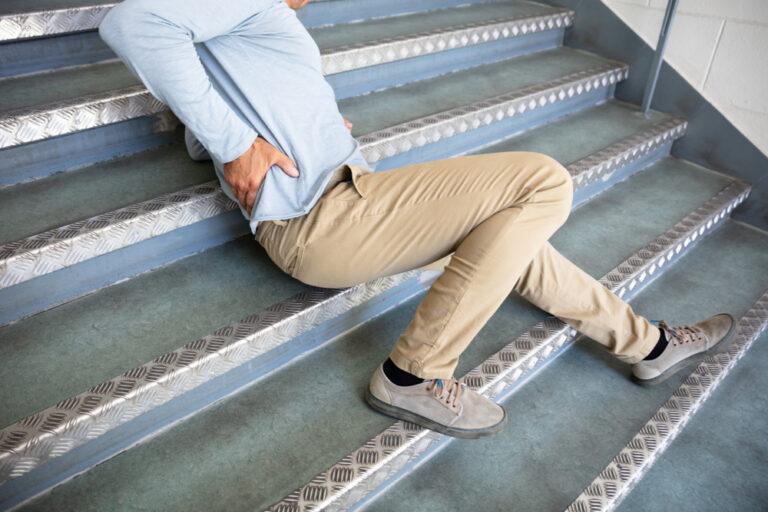
Broken staircases are one of the most common causes of serious falls in homes, apartment buildings, workplaces, and public spaces. If you were injured in this type of accident, you are probably wondering how to seek justice.
Responsibility for a broken staircase injury typically rests with the party that controls the property and failed to maintain a safe environment.
Premises liability cases require a thorough investigation. A New York premises liability lawyer can look into your accident, gather evidence to prove liability, and help you recover compensation for your injuries.
Who is Liable for a Broken Staircase Injury?
Liability for a broken staircase injury usually falls on whoever had control over the property and failed to fix or warn about a dangerous condition. This is not necessarily limited to a single person or business.
Potentially liable parties include:
- Property owners: Owners are responsible for maintaining safe conditions on their property. If they ignore damage or fail to carry out regular inspections, they may be liable.
- Landlords and property managers: In rental properties, landlords and management companies often handle maintenance duties. If they knew or should have known about a broken step or loose railing, they can be held responsible.
- Commercial business owners: Stores, restaurants, hotels, and offices must keep customer and employee areas reasonably safe.
- Tenants in control of the space: In some rental or commercial lease agreements, tenants may be responsible for maintenance in certain areas, including staircases inside their leased space.
- Maintenance companies or contractors: If a third-party repair company performed faulty work or ignored safety issues, they may share liability.
- Government entities: If the injury happened on public property, a government agency may be held responsible.
Common Types of Negligence in Premises Liability Cases
To hold someone legally responsible for a broken staircase injury, you must prove negligence. In other words, you must show that the responsible party failed to act reasonably under the circumstances.
Common types of negligence in staircase injury cases include:
- Failure to inspect: Regular inspections are expected in most residential and commercial properties.
- Failure to repair known damage: Ignoring complaints or visible damage can qualify as negligence.
- Failure to warn: Temporary warnings, such as signs or barriers, may be required if repairs cannot be made immediately.
- Violation of New York State building codes: Stairs must meet safety standards for height, depth, and structural integrity.
- Delayed maintenance: Waiting too long to fix a known issue can make an otherwise minor problem dangerous.

How Do You Prove Negligence?
To win a premises liability case, you typically need to establish four elements:
- Duty of care: The property owner or responsible party had a legal obligation to maintain safe stairs.
- Breach of duty: They failed to repair, inspect, or warn about the hazardous condition.
- Causation: The unsafe staircase directly caused your injury.
- Damages: The injury resulted in measurable losses such as medical bills or lost income.
Evidence that can help you prove negligence may include photos of the broken staircase, witness statements, maintenance records, and surveillance footage.
Common Causes of Broken Staircase Accidents
Staircase injuries rarely happen randomly. Common causes of these accidents include:
- Loose or missing steps: A step that shifts or breaks under someone’s weight can cause them to fall.
- Broken or unstable handrails: Without a secure handrail, even a small misstep can lead to a serious fall.
- Uneven or worn stair surfaces: Differences in height or depth between steps increase the risk of someone tripping.
- Poor lighting: Inadequate lighting makes it difficult to see hazards.
- Water or debris: Spills, rainwater, or clutter can easily cause someone to fall.
- Poor construction: Poorly built stairs may shift unexpectedly or even collapse.
Each of these conditions can qualify as negligence if the hazard was known or should have been discovered through reasonable inspection.
Why Hire a Premises Liability Lawyer?
Staircase injury cases may look simple on the surface, but they often involve multiple liable parties who all attempt to shift blame for the accident.
A premises liability lawyer can step in and help by:
- Investigating the accident and collecting evidence
- Identifying all responsible parties
- Calculating your short-term and long-term damages
- Negotiating with insurance companies
- Representing you in court (if necessary)
What to Do After a Broken Staircase Injury
The steps you take after a slip and fall accident can affect your legal options. It’s important to:
- Seek medical attention immediately: Even if your injuries seem minor, it’s crucial to document them for your claim.
- Document the scene: If you are able, take photos or videos of the hazard that caused your fall and the surrounding area.
- Report the incident: Notify the property owner, landlord, or manager and request a copy of the incident report.
- Talk to witnesses: If anyone saw the fall or the hazard that caused it, ask for their contact information.
- Track your expenses: Save all medical bills and other expenses related to the accident.
- Get legal help: Our personal injury lawyers can handle the insurance company and gather evidence before it disappears.
Contact a Premises Liability Attorney
Most staircase accidents are preventable. If you were injured in a fall that wasn’t your fault, an experienced premises liability attorney from Shulman & Hill can help you build a strong claim and secure a fair settlement.
Schedule a free case review to learn how you can pursue justice.